Family First
TALK IT OUT, BEFORE IT TURNS INTO A STORM
Why communication must be a ritual, not a reaction
By Rahul Kapoor
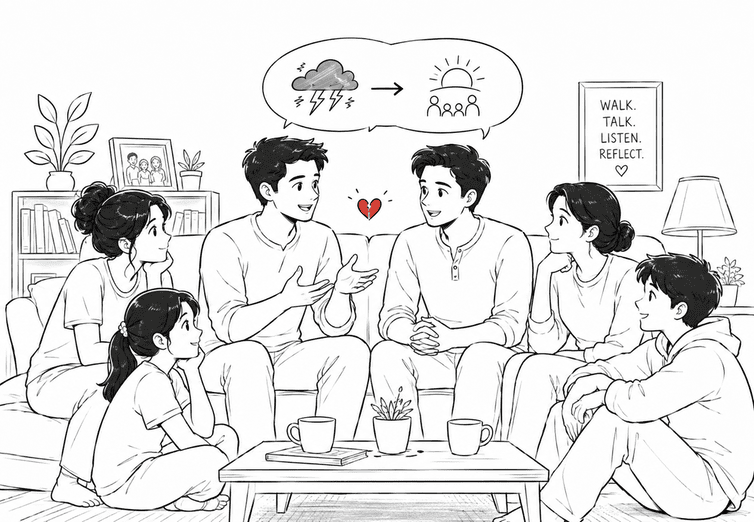
In most joint families, conflicts don’t start with big betrayals—they begin with small misunderstandings. A misheard comment. A rude tone. A delayed response. A perceived injustice. Tiny cracks that, if left unattended, grow into emotional earthquakes.
This is what we call the micro-misunderstanding with a macro impact.
And here’s the real danger:
These moments aren’t always obvious. They hide in
everyday interactions. They quietly build walls between
hearts. And by the time anyone notices, it’s too
late. The damage is done.
The Unseen Complexity of Joint Families
Joint families come with a beautiful complexity—multiple personalities, generations, emotional wiring, and cultural beliefs all under one roof. But with this richness comes risk.
Most of us are taught to adjust or
suppress in the name of peace.
But constant adjusting breeds
resentment, and suppression leads to
emotional implosion.
One day, the bottled-up emotions explode—and when
they do, they shatter more than just the surface.
This is why communication isn’t a tool for conflict resolution—it’s a tool for conflict prevention.
Build Emotional Hygiene, Daily
The smartest families don’t wait for things to break. They build rituals of communication. Not formal meetings. Not dramatic interventions. Just daily emotional hygiene.
Like:
- Sharing a cup of coffee in the morning
- Playing a game together in the evening
- Taking short walks and catching up
- Asking with care instead of assuming with fear
- Saying “I feel hurt” instead of “You always do this”
- Being mindful of tone and timing
The basics matter. And when practiced with sincerity, they create extraordinary emotional safety.
A Real Story: The 5-Minute Conversation That Shaped a Generation
Two brothers. One large family. One big decision—should they live together or build separate homes?
They could easily afford two separate houses. But
something deeper pulled at them. One day, the younger
brother initiated a heartfelt conversation. He
asked:
“Twenty years from now, when our children are
married and busy in their lives, who will we come
home to? We’ll be lonely, meeting each other
only on weekends? Or can we choose today to stay
together?”
That one question sparked a five-minute conversation that shaped the future of an entire family.
They decided to build one home.
Not just physically—but emotionally.
One kitchen. One living space. One heart.
When they spoke to their spouses and children, they all
agreed.
Not because of pressure. But because of clarity,
vision, and emotional unity.
What seemed like an idealistic outcome was simply the result of consistent emotional culture. They didn’t arrive at this in a crisis. They arrived at it through trust built over time.
REFLECT
- Are you waiting for a conflict before initiating conversation?
- Are the little things going unspoken, creating invisible distance?
- What rituals of connection does your family need?
REMEMBER
Great communication doesn’t need a reason. It
needs a rhythm.
And in joint families, that rhythm must be daily,
intentional, and emotionally safe.
TAKEAWAYS
- Misunderstandings are inevitable—what matters is how quickly we address them.
- Don’t suppress—express, with care and timing.
- Build rituals of connection: Walk. Talk. Listen. Reflect.
- Speak from your feelings, not your judgments.
- A 5-minute honest talk today can prevent a 5-year breakdown tomorrow.