Family First
RESPECTING THE NEW GENERATION
Dignity over dominance in today's joint families
By Rahul Kapoor
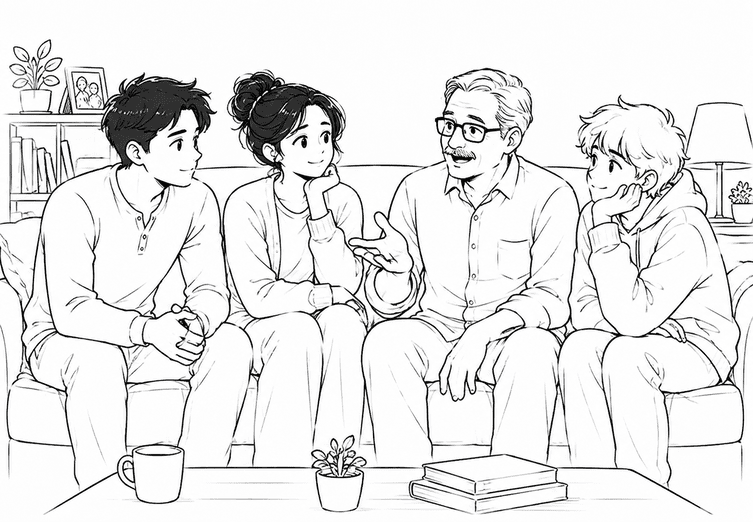
In many joint families, the elders—especially the patriarchs—naturally assume the role of authority. With years of experience and success behind them, they feel a deep responsibility to guide, protect, and lead the family.
But somewhere along the way, guidance can become control, and care can unintentionally turn into coercion.
I once worked with a highly respected professional—a man who had built an exceptional career and was running multiple successful businesses. He was celebrated in his field, admired by colleagues, and widely seen as a role model.
But at home, things were falling apart.
His two grown children—both capable and intelligent—refused to work with him or even engage in basic conversations. Despite his intentions, the relationship had hit a wall.
When Success Outside Doesn't Translate Inside
He couldn't understand why.
"I have built everything from scratch," he said.
"People outside hang on to my every word. Why don't
my children listen?"
What he didn't realise was that respect in the boardroom doesn't guarantee reverence at home.
His clients saw his best self—sharp, articulate,
powerful.
But his children saw the version he didn't
filter—commanding, impatient, emotionally
unavailable.
His daughter, once a top-performing student, had
begun slipping in school. In a private session, she
told me:
"I started doing poorly on purpose. I just
wanted to stop expecting anything from me. I
wanted to show him that I don't care."
That moment broke my heart.
This wasn't rebellion. This was emotional exhaustion.
The Psychological Generation Gap
Many elders in today's joint families grew up in a time when obedience was normal, silence was expected, and parents didn't explain—they instructed.
And for that time, it worked.
But the world has changed.
Today's younger generation is emotionally aware, globally exposed, and deeply expressive. They don't just want to be tolerated—they want to be understood. They expect respect as individuals, not just as dependents.
In joint families, where multiple generations live
and work together, this becomes even more
critical.
The old model of
hierarchy-based leadership must
evolve into
relationship-based leadership.
It's not about giving up authority—it's about redefining it.
True leadership today is not loud or forceful. It is inclusive, patient, and willing to listen before speaking. It uplifts rather than overshadows.
Let the younger generation grow—not under your shadow, but beside your light.
REFLECT
- Have you unintentionally dismissed or ignored the younger generation's voice in your family?
- Do your children or younger siblings feel seen, valued, and emotionally safe with you?
REMEMBER
At home, leadership isn't a title—it's a
relationship.
It's measured not by how many listen to you, but
by how many feel heard by you.
TAKEAWAYS
- Respect must flow both ways. Elders deserve it—but so do younger voices. Dignity builds emotional safety.
- Your résumé doesn't work at home. What earns applause outside may alienate family if heart is missing.
- The new generation needs trust, not surveillance. Include them, guide them—but start by truly listening.