Family First
THE POWER OF ADMITTING MISTAKES
By Rahul Kapoor
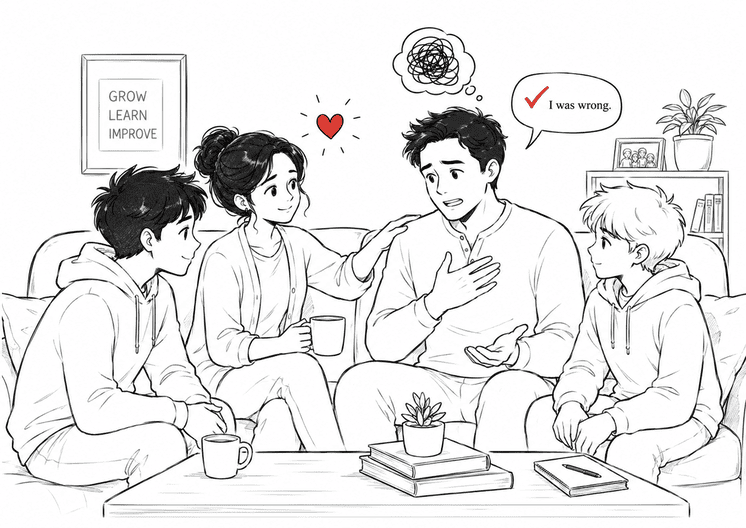
Accepting fault is not a sign of weakness. It’s the first step toward wisdom.
Mistakes are a part of life. They don’t define failure - they signal that we tried, we learned, and we now have a choice: to grow or to repeat. While learning may sometimes take time, what truly becomes painful is when the same mistake is repeated again and again. That’s when frustration sets in, not just for the person making the mistake, but for everyone around them.
We all want to do well. Most people carry good intentions. No one deliberately wants to hurt another, and yet, we do - through our words, actions, or lack of awareness. It’s natural. We’re human. The real strength lies in recognizing our faults and saying, “Yes, I was wrong.”
But why is it so hard?
Some people have never had a healthy relationship with mistakes. They’ve been raised to believe that making a mistake is equal to failure. That being wrong is shameful. That being seen as imperfect makes them weak. So instead of admitting fault, they become defensive, rigid, or even aggressive.
There’s a saying - “It’s like a cat drinking milk with its eyes closed, thinking no one can see it.” Or an ostrich, which although capable of running faster than a wolf, buries its head in fear - only to be attacked. When people refuse to acknowledge their mistakes, they aren’t protecting themselves - they’re isolating themselves. They may defend themselves endlessly, but inside, they’re slowly losing connection with those who care for them.
In families, this can be heart-breaking. People feel helpless, watching someone they love self-sabotage. The instinct is often to push, argue, or lay bare the truth. But more often than not, that only leads to denial, defensiveness, and deeper hurt.
A Father’s Struggle
I once worked with a family where the father struggled deeply with this. He had a strong personality and a good heart, but he simply couldn’t accept that he could be wrong. Every mistake - no matter how obvious, was met with long justifications, defensiveness, or silence.
Over time, this created a wall. His wife, though patient, found it increasingly difficult to communicate without triggering an argument. His children, now in their late teens and early twenties, gradually stopped confronting him altogether. They avoided difficult conversations. They stopped opening up. And though he sensed the distance, he couldn’t understand why or how to fix it.
He wasn’t a bad man. He was a man trapped in the belief that admitting fault would make him lose respect. Ironically, what he feared the most is what happened anyway - he lost connection. Not because of his mistakes, but because he couldn’t say, “Yes, I made one.”
What such people need most is not confrontation but compassion.
What Can You Do?
- Recognize that the person isn’t strong - they’re afraid. Behind the denial is a fear of being seen as less.
- Don’t force truth down their throat. Instead, give them time. Wait for the right moment. Let their mind calm down.
- When they’re ready, gently offer insights, not just criticism. Show alternate ways of handling the situation.
- If the pattern continues, consider professional help. But remember, these are often the people who think others need therapy, not them. So tread wisely.
If you must hold a mirror, do it with love. Because forcing reflection on someone who isn’t ready can shatter the very mirror you’re trying to hold.
REFLECT
- Do you struggle to admit your own mistakes? Why?
- Is there someone in your family who needs more compassion and less correction?
- Can you help them feel safe enough to look inward?
REMEMBER
Defensiveness is a form of fear.
Humility, on the other hand, is the highest expression of strength.
TAKEAWAYS
- Mistakes are a natural part of life and growth.
- Repeating them knowingly is harmful; learning from them is powerful.
- Create space and safety for reflection, not resistance.