Family First
WHEN CONTROL BECOMES A CURSE
By Rahul Kapoor
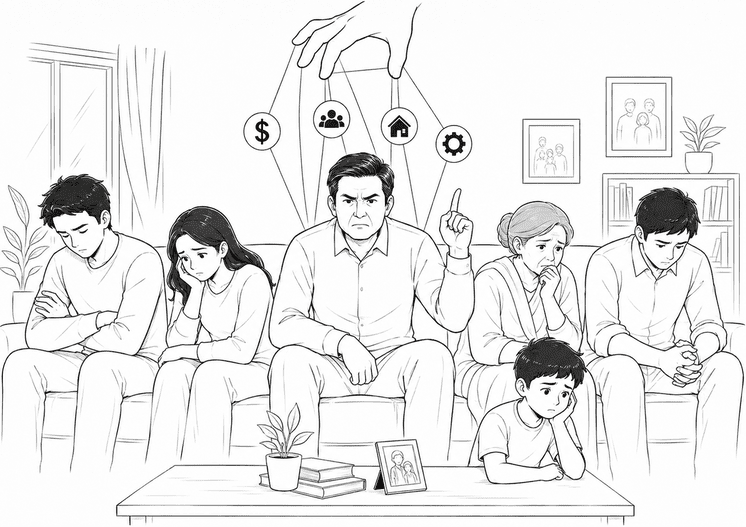
Sometimes, the greatest threat to harmony comes from within the home.
In many joint families, despite the wealth, success, and privileges that exist, there’s often one person whose behaviour becomes the source of pain for everyone around. Not because they’re incapable. Not because they lack intelligence. But because deep within, they are driven by a force stronger than reason - insecurity masked as control.
On the outside, they may appear successful - professionally stable, financially abundant, even respected by outsiders. But inside the family, their need to control every decision, every process, and every relationship becomes toxic.
It starts with fear - fear of being excluded, of being irrelevant, of losing status. And when these fears go unaddressed, they turn into obsession. The person begins to feel entitled to make all the decisions, even if they’re unqualified or unfair. They use anger, threats, silence, and emotional pressure as weapons. They justify their actions as being “for the good of the family,” but deep down, it’s about maintaining dominance.
A Story of Silent Destruction
I remember one such case. A man had a difficult childhood. He felt ignored, cheated, and underappreciated. But through hard work, he built a successful business and earned his place as the eldest son in the family.
When the father passed away, he was entrusted with responsibility. For a while, he managed things well. But slowly, his fear of losing control began to surface. He made every decision unilaterally. He dismissed opinions. When things didn’t go his way, he created fear. No one dared question him - not because they agreed, but because they feared the conflict.
And while he stayed in control, the cost was heavy:
- Siblings stopped expressing themselves.
- Younger members lost respect, even affection.
- Business decisions were delayed.
- Joy in family gatherings disappeared.
All in the name of “doing what’s best.”
What’s Really Going On?
This isn’t just about power. It’s about unhealed wounds.
When someone carries pain from the past and never processes it, they recreate that pain in the present - over and over. They control because they fear being out of control. They dominate because they fear being left behind. And they hurt others because they themselves are hurting.
And if the family doesn’t address it, it can lead to:
- Long-term resentment
- Mental health breakdowns
- Collapsed communication
- Loss of emotional bonding
What Can Be Done?
Such situations require maturity and compassion - not retaliation.
If you identify someone in your family acting this way, don’t attack them. Create space for honest, safe conversation. If possible:
- Bring in a mentor, a coach, or a family therapist.
- Help the person feel seen not threatened.
- Remind them that leadership is not about control - it’s about trust.
If nothing works, boundaries must be drawn. Because enabling toxic control is not love - it’s silent surrender.
REFLECT
- Is someone’s unspoken pain becoming a pattern of control in your family?
- Are you playing along out of fear, or trying to bring real change?
- What conversation needs to happen that no one is having?
REMEMBER
Unhealed people will always try to control what they fear losing.
True family strength lies not in authority but in trust, vulnerability, and shared leadership.
TAKEAWAYS
- Identify when control is masking deeper insecurity.
- Address it with empathy, not ego.
- Don’t wait for things to collapse - create systems of support, conversation, and healing early.