Family First
SUSPICION AND TEMPTATION
By Rahul Kapoor
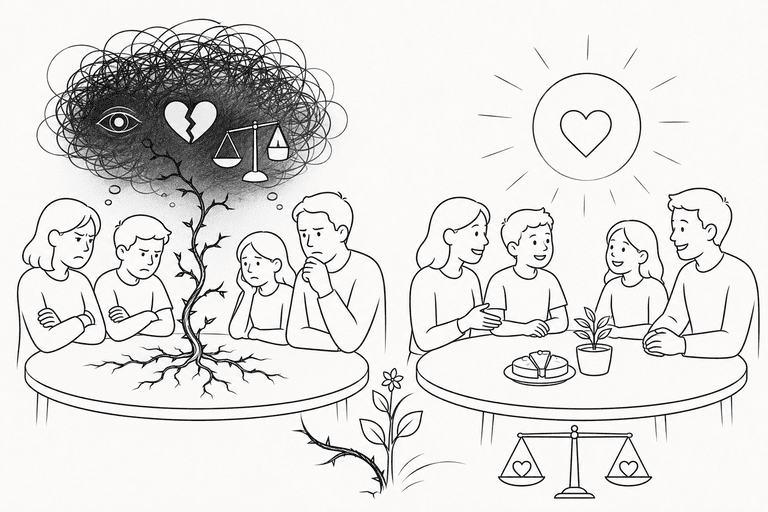
The two silent forces that can poison even the strongest bonds.
In many families, things start off well - there’s warmth, trust, and a sense of togetherness. But sometimes, it only takes one thought to change everything:
“Am I being taken for granted?”
“Why do they get more than I do?”
“Is something going on that I don’t know?”
That single seed of suspicion, if left unchecked, begins to grow like a weed. And once that weed enters your mind, it starts spreading - to your actions, your tone, your energy. Suddenly, the people you once loved feel like potential threats. You stop trusting their words, their intentions - even their love.
It often begins with something small. A comment. A decision. An unexplained change. Instead of addressing it with a simple, open-hearted conversation, we let it fester. We think, “Maybe I’m overreacting,” but don’t seek clarity. Or worse, we talk to the wrong people, and instead of helping, they fuel our doubts.
Suspicion doesn’t just live in the mind, it slowly creeps into the home, turning love into calculation, joy into tension, and relationships into silent battlegrounds.
The Danger of Temptation
Temptation is suspicion’s quiet cousin. It’s not always obvious but equally dangerous. It shows up as:
- Wanting a little more than your share.
- Doing a little less of the hard work.
- Taking a little more credit than deserved.
- Giving a little less and expecting a little more.
It might seem harmless at first. A biscuit. A chore. A shopping bill. A private indulgence. But over time, this “taking more than you give” attitude chips away at fairness - and fairness is the bedrock of any peaceful relationship.
As a child, my father taught me something profound: “If you’re dividing something like a piece of cake, make sure you take the smaller piece.” It wasn’t about the size of the slice. It was about building a mindset that values fairness over personal gain. That lesson, if nurtured young, stays for life.
Temptation becomes a real danger when it’s unchecked. Especially when the message we live by is: “As long as I’m doing fine, it’s okay.” That mindset doesn’t just hurt others - it slowly isolates you.
The Bigger Picture
I once played a management game called The Prisoner’s Dilemma. In it, everyone could win but only if they played fairly. Yet most players chose selfish strategies out of fear or greed, and in doing so, everyone lost.
That’s what life becomes when we choose temptation over trust, and suspicion over clarity:
A lose-lose scenario.
A family where no one wins.
But when fairness is practised, when conversations are open, and when children grow up witnessing these values in everyday choices, then a family becomes a place of peace, not paranoia.
REFLECT
- Do I let small doubts grow into big stories?
- Where in my life am I quietly choosing temptation over fairness?
- What’s one conversation I’ve avoided out of fear that I could approach with love instead?
REMEMBER
Suspicion thrives in silence. Temptation grows in entitlement.
But honesty and fairness are antidotes powerful enough to bring any relationship back to life.
TAKEAWAYS
- Talk when doubts are small, before they poison your peace.
- Fairness isn’t just about what you get, it’s about what you’re willing to give.
- Build a culture of trust through daily choices, not just big declarations.