Family First
THE COST OF OVER-PARENTING
By Rahul Kapoor
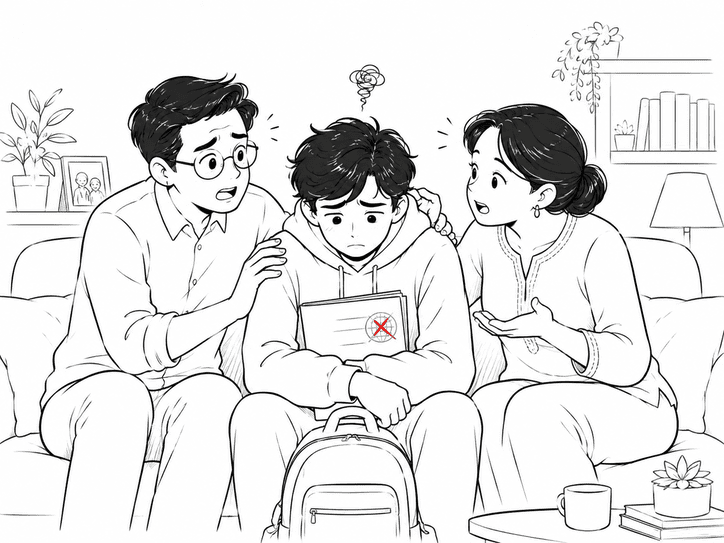
Parenting is a beautiful responsibility - one where we pass on values, virtues, and wisdom to our children. We want them to live with integrity, take care of themselves, and care for those around them. But sometimes, in our desire to protect and guide, we cross an invisible line.
We forget that children have their own learning cycles. They are not just our reflections, they are individuals. We are meant to be their sounding boards, their gentle advisors. But too often, we mix up the roles. And in our attempts to help, we end up harming.
The Child with a Rejected Visa
Take the example of a young boy who has just completed his 12th standard exams. He secures admission into a prestigious university in the U.S., but when he applies for a visa - it gets rejected.
Now, the boy is in turmoil. Many of his friends have moved on to their colleges abroad. He feels left behind. A gap year looms ahead, and he is unsure of what to do. He doesn’t want to study in his home country, but he’s stuck.
He begins to question himself:
- Was I not good enough?
- Did I say something wrong?
- Am I really capable?
He spirals inward. And then the parents - understandably concerned, step in. But their concern turns into over-concern. Too many questions. Too much hovering. Too much empathy, even.
The child doesn’t feel supported. He feels smothered.
What he needs is quiet presence. A silent hand on his back. A gentle “we’re here with you, no matter what.” Not more lectures. Not comparisons. Not well-meaning advice wrapped in urgency.
When the child begins to withdraw - stops sharing, stops smiling - it’s not always because they don’t want to talk. It’s because they feel misunderstood.
When Good Intentions Go Wrong
At this point, parents might start pushing again.
“This is the most important phase of your life.” “Don’t waste your time.” “Do something constructive!”
But every child is unique. And not every child has the same emotional foundations as the one you’re comparing them to. In trying to “motivate” them, you may be magnifying their sense of inadequacy.
Over-parenting often comes from our own fears, fears rooted in our past, our upbringing, or our unhealed wounds. Without awareness, we pass on our anxieties in the name of care. And that’s when the child starts to shut down.
They don’t feel heard. They don’t feel seen. They feel controlled.
Parenting with Awareness
If you find yourself in such a situation, seek support. Talk to a coach. Read books. Watch videos. Have real conversations with other parents.
Better yet, involve a therapist - not just for the child, but for yourself.
Therapy is not taboo. It’s responsible parenting.
When your child has a fever that lasts more than a few days - you go to a doctor. If your child’s spirit has been dampened for weeks or months, why wait?
A therapist, a coach, a thinking partner - they don’t replace your role as a parent. They enhance it.
Some families are lucky to have a strong support ecosystem. Others may have to build it. But remember:
- Every child is different.
- Every path is unique.
- Every moment has its own rhythm.
REFLECT
- Are you parenting from awareness or anxiety?
- Do you truly listen to your child, or are you quick to advise?
- Can you hold space without trying to fix everything?
REMEMBER
Love is not control. Care is not over-involvement.
The Universe has a perfect plan for each soul. Trust it. Don’t try to overmanage it.
TAKEAWAYS
- Over-parenting often arises from our own fears, not the child’s needs.
- Children need presence more than advice, especially in times of emotional crisis.
- Seeking professional support is not a weakness, it’s a strength in parenting.