Family First
THE ART OF EMOTION REGULATION
By Rahul Kapoor
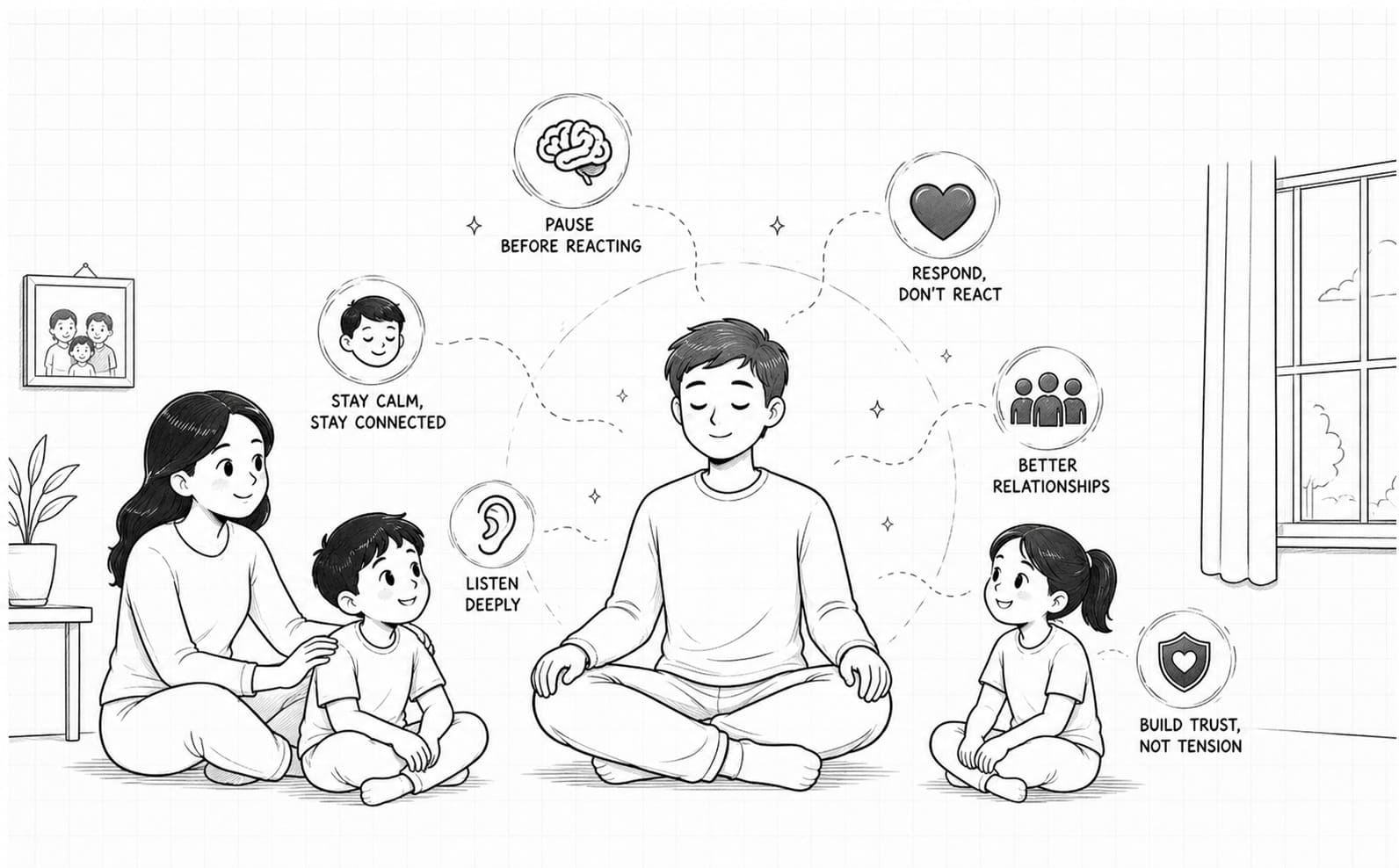
In every family, every relationship, and every workplace - one skill quietly determines how much peace or pain we experience: emotion regulation. Not control. Not suppression. But the art of responding without reacting.
Think about physical pain: if you get a paper cut, you wince. If it’s a deeper wound, you gasp. If a bone breaks, you may scream - and need a doctor. Each level of pain deserves a different response.
The same is true for emotional discomfort. But many of us don’t recognise this. We overreact to small concerns or underreact to serious ones and in both cases, damage is done.
Take a common example: a house helper who’s often distracted by loud phone calls. Her work suffers. You ask her, kindly at first. The next day, you remind her. By day three, nothing changes. You feel the pressure rising.
This is the test. Not of her discipline - but of yours.
Do you explode? Or do you stay grounded, clear, and firm?
If you raise your voice, you may still be right - but now, you look wrong. The issue is forgotten. You’ve become the problem.
That’s the cost of poor emotion regulation. It steals your moral authority.
We see this in homes every day. Someone gets frustrated and shouts. The original issue gets buried under a wave of emotional energy. And even if the person had a point, it gets lost in the noise.
Emotions are real. Anger, sadness, fear, frustration - these are human. But emotion regulation is not about pretending to be calm - it’s about training your nervous system to stay steady when the heat rises.
It’s about giving the right weight to the right emotion, at the right time. Not more. Not less.
In a home where this is practiced, everything shifts: fewer arguments, more listening, better collaboration, deeper trust. That’s what regulation gives you: presence without pressure.
REFLECT
- Do I respond to emotional triggers or react from habit?
- When was the last time my tone, not my point, became the problem?
- How might my relationships change if I practiced pausing before responding?
REMEMBER
You can be absolutely right - and still lose the moment if you lose your calm. Staying grounded isn’t weakness. It’s wisdom.
TAKEAWAYS
- Emotion regulation is the ability to stay present and steady, not passive or suppressed.
- The loudest person in the room often loses the deepest respect.
- Great families aren’t built by people who never feel but by those who know how to feel and still choose wisely.