Family First
LIVING IN THE FUTURE (AND MISSING THE NOW)
By Rahul Kapoor
Some people move so fast through life that they forget to live it. And quite often, these are the ones we love most.
In many families, you’ll notice someone who is always doing something - running from one task to the next, trying to finish everything before they allow themselves to pause. It may look like discipline or drive, but if you look closely, there’s often a quiet exhaustion underneath. A sense of being stuck in a never-ending loop of work.
Let me give you an example.
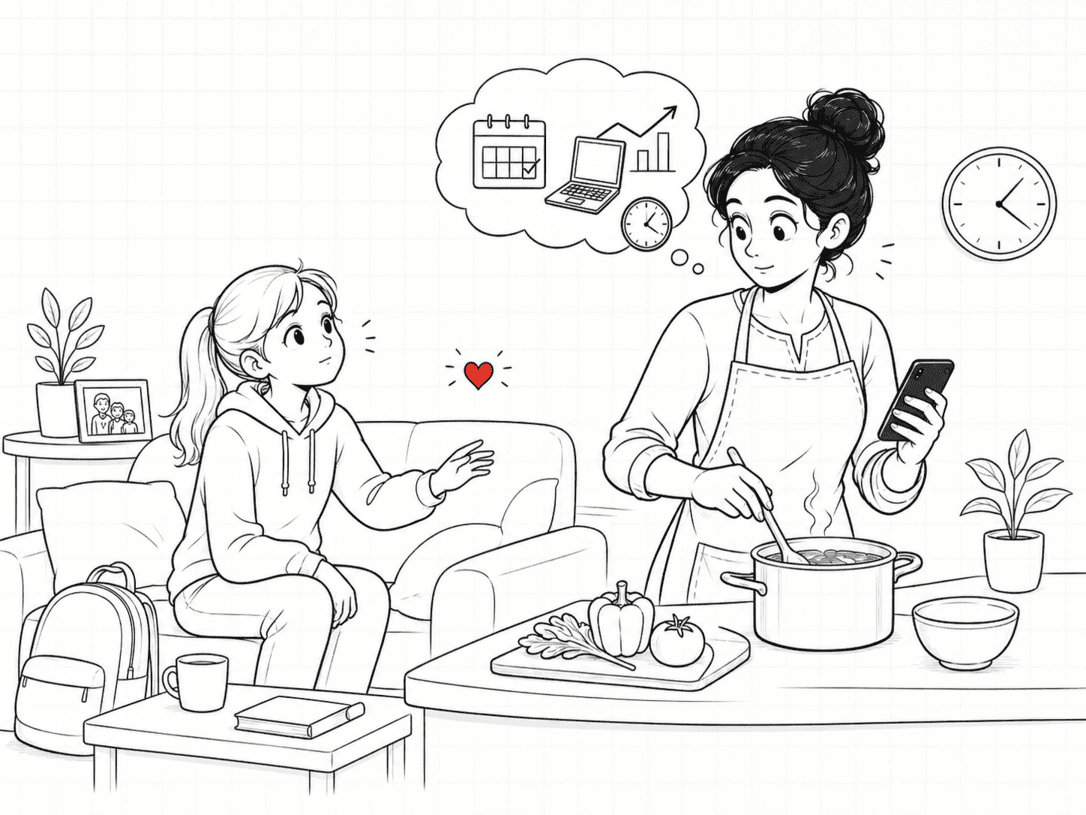
A young girl comes home after a long, tiring day at her internship. She enters the house hoping for a warm smile or a little check-in. Her mother, busy in the kitchen, immediately says, "Can you help me with something?" The daughter hesitates, then says, "Sure, but can we just talk first? I’d like to share how my day was." The mother replies, "Let’s finish this first, and then we’ll sit and talk."
But as soon as one task ends, another begins.
By the time dinner is done, the mother has moved on to planning tomorrow’s schedule. When she finally sits next to her daughter, it’s not to talk or connect but to suggest another event or activity. Something that "needs to be done." The daughter, already feeling emotionally skipped over, refuses. She doesn’t want to join. The conversation begins to turn. Frustration grows. Silence follows.
What happened here?
They both wanted connection. But they missed each other.
The mother thought, "Let me finish everything, and then I’ll be available." The daughter thought, "I just need a moment of presence now."
Neither was wrong. But the moment was lost.
In homes across the world, this is more common than we realise. We promise ourselves peace and connection once the to-do list is complete. But in today’s world, the list is never-ending. There will always be another dish to clean, a phone call to make, a task to complete.
When you ask people who live like this about their past, they often say it was the same. Ask them about the future, and it’s no different. Their whole life becomes a loop of running toward a tomorrow that never arrives.
Why Presence Matters
Being present is not just a spiritual idea; it’s a practical necessity.
- It restores your nervous system.
- It strengthens relationships.
- It creates space for reflection.
- It invites joy into ordinary moments.
When you stop, even briefly, you allow your brain to shift out of survival mode. You start noticing things again - the way your child’s voice changes when they're tired, the way your partner sighs when they need support, the way your own body feels when it’s had enough.
Try This: The Pause Practice
Just like you pause a show when someone enters the room, practice pausing your momentum when a loved one needs your attention.
Ask yourself:
- Can this task wait five minutes?
- What does this person in front of me need right now?
- Am I reacting from urgency or choosing to be present?
These small questions invite powerful changes.
REFLECT
- When was the last time you were truly present for someone you love?
- What stops you from pausing?
- What are three simple rituals that could help you be more grounded in the now?
TAKEAWAY
- Life doesn’t begin when you finish everything. Life is happening while you do everything.
- Connection is not about big gestures. It’s about pausing.
- Practice being present, and you’ll notice how much more love already exists in your life.