Family First
THANK YOU. PLEASE. SORRY.
By Rahul Kapoor
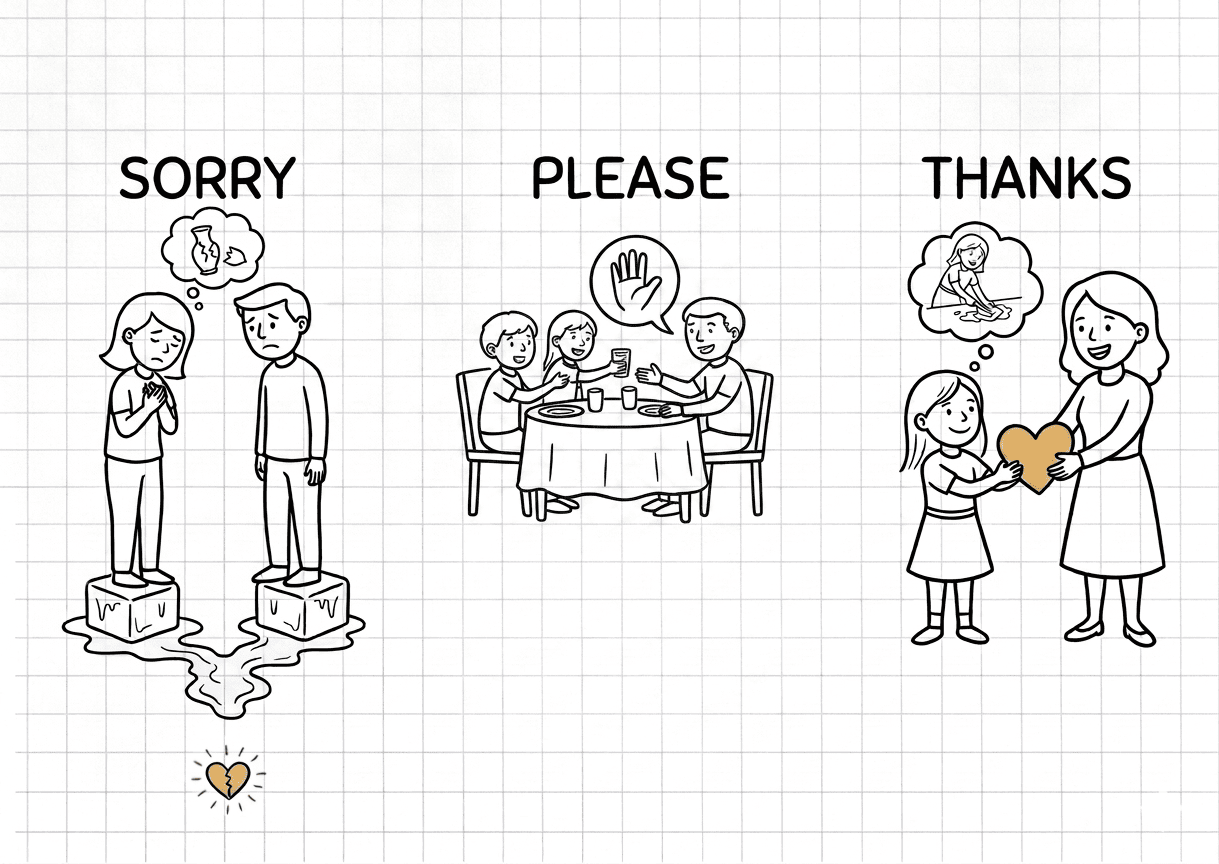
The other day, I was visiting a friend when I heard a little child getting ready for school, repeating three magical words they had just learned in class: Thank You, Please, and Sorry. It made me think.
These words are taught early in life. Parents insist on them. Teachers reinforce them. And for good reason. They’re not just words, they are emotional bridges. They soften tone, foster gratitude, show respect, and nurture human bonds. But as we grow older, something strange happens, we begin to forget them.
We stop saying thank you to those closest to us. We command without a please. We avoid sorry even when it’s painfully obvious we were in the wrong. Somewhere along the line, love turns into entitlement. We assume that if someone does something for us - a spouse, a parent, a child - it’s their duty. They’re supposed to do it. We stop acknowledging their efforts, and that’s where heartbreak starts creeping into relationships.
Let me give you an example.
Imagine the mother is away from home for a week. In her absence, the elder daughter steps up. She cooks, manages the home, helps with younger siblings - plays the role of the lady of the house. Now, when the mother returns, what if she gathers the family and simply says, “Thank you, beta. You stepped up, and I saw it. I’m proud of you.”
That moment becomes unforgettable. That child not only feels recognised, she now wants to do more in the future. A simple act of acknowledgment becomes fuel for contribution.
Let’s talk about Please. It’s incredible how one word can create so much positivity. “Give me that water” sounds very different from “Can you please pass me the water?” The latter invites cooperation, warmth, and respect. Yet we often forget to use it at home, where it matters the most. Ironically, when we’re outside with waiters at hotel, staff at office, or even strangers, we say please effortlessly. Why? Because we don’t take them for granted.
And then comes the toughest one: Sorry. A word so powerful, yet so often resisted. Whether we are actually wrong, or even when we’re partially right, just saying “I’m sorry” can melt egos and defuse tension in seconds. But most people don’t use it. Why? Because ego holds them back.
I remember a young colleague of mine, Deepti. Whenever she made a mistake, she would come to me with a gentle smile and say, “I’m so sorry, I messed up.” No excuses, no defensiveness. Just genuine ownership. Her innocence and sincerity would make it impossible to stay angry. In fact, I found myself feeling more affectionate towards her, and more open to mentoring her.
Now contrast that with what happens in most families when kids make mistakes, they justify. When parents lose their cool, they rarely apologise. “Sorry” becomes a power play, not a healing word.
So yes, if there’s one thing that can instantly improve relationships at home, it’s bringing these three words back into daily life.
REFLECT
- We learn “Thank you, Please, and Sorry” early in life but forget them as we grow older.
- These words aren’t about formality, they are about respect, recognition, and emotional hygiene.
- Taking each other for granted is one of the fastest ways to damage love.
TAKEAWAY
- Say thank you more often, especially to family. Even if it’s “their job,” acknowledgment creates motivation.
- Use please instead of giving orders, it turns demands into requests and invites cooperation.
- Don’t hesitate to say sorry, even when you're right. It’s not a sign of weakness, it’s a sign of strength and emotional maturity.
These three words, simple as they may seem, can change the energy of your home, one sentence at a time.